Progressive Psytrance vs Regular Psytrance: Key Differences
Discover the technical differences between Progressive Psytrance and regular Psytrance: BPM, basslines, layering, and production approach. Build better tracks
Progressive Psytrance vs Regular Psytrance: Key Differences
Progressive Psytrance operates at 136-140 BPM with deep, rolling basslines and minimal layering, while regular Psytrance (full-on) sits at 140-148 BPM with aggressive, sharp basslines and dense arrangement stacks. Understanding מה ההבדל בין פרוגרסיב סייטראנס לסייטראנס רגיל? helps producers choose the right sonic approach for their creative vision. The progressive approach prioritizes hypnotic groove development and spatial dynamics over relentless sonic intensity, creating a journey-focused listening experience that builds tension through subtraction rather than addition. Understanding these foundational distinctions transforms how you structure kicks, program bass sequences, and engineer mix headroom across both subgenres.
Quick Answer: BPM, Bass Character, and Arrangement Philosophy
The fundamental split between progressive psytrance and regular full-on psytrance comes down to three technical pillars: tempo selection, bassline behavior, and how densely you stack your arrangement. Festival lineups in 2026 reflect this division, with opening slots favoring the hypnotic, rolling character of progressive tracks while peak-time hours demand the explosive energy of full-on psytrance.
| Parameter | Progressive Psytrance | Regular Psytrance (Full-On) |
|---|---|---|
| BPM Range | 136-140 BPM | 140-148 BPM |
| Bassline Style | Deep, rolling, sine-wave foundation | Aggressive, sharp FM stabs |
| Layering Approach | Minimal (8-12 elements at drop) | Dense (16-24 elements at drop) |
| Kick Punch | Sub-heavy, rounded transient | Sharp transient, mid-range click |
| Energy Curve | Gradual build, hypnotic tension | Explosive release, constant intensity |
Progressive psytrance carves out hypnotic psytrance groove through restraint. The bassline carries the narrative while percussion elements weave around it sparingly. Full-on psytrance flips this formula, layering aggressive leads, vocal fragments, and FX cuts over a driving kick-bass foundation. Both styles serve different purposes in a DJ set, and understanding when to deploy each makes the difference between a forgettable track and one that connects with the dancefloor.
For producers seeking festival-ready progressive hooks, the key lies in mastering this intentional minimalism.
Bassline Architecture: Rolling Grooves vs Sharp Stabs
The bassline defines the genetic code of any psytrance track. Progressive psy builds its foundation on rolling bassline technique using smooth sine-wave oscillations that create a continuous, flowing sensation. Regular psytrance full-on deploys staccato bass stabs, often synthesized through FM synthesis, that punch through the mix with aggressive transient attacks.
Frequency modulation shapes these differences significantly. Progressive basslines typically occupy a narrow frequency band between 40-80 Hz, using filter modulation to create movement without disrupting the sub-bass pocket. Full-on basslines spread across 60-200 Hz, deliberately allowing the transient click to cut through mid-range frequencies where lead synths and vocals compete for space.
- Progressive Bass Characteristics: Smooth legato notes, long release tails, LFO filter sweeps, sidechain triggered at kick onset, sub-focused EQ
- Progressive Frequency Range: 40-80 Hz fundamental, minimal harmonic content, warm saturation instead of distortion
- Progressive Rhythm: 16th note rolling pattern, slight swing on off-beats, groove pocket emphasis over punch
- Full-On Bass Characteristics: Sharp staccato hits, short decay, FM synthesis for metallic textures, hard-hitting transients
- Full-On Frequency Range: 60-200 Hz spread, prominent mid-range click, layered bass + kick combination
Sidechain compression timing differs between styles too. Progressive psy uses slower attack and release settings (attack 10-20ms, release 100-150ms) to let the bass breathe under the kick. Full-on psy demands faster response (attack 0-5ms, release 50-80ms) for that ducking effect that makes the kick slam through.
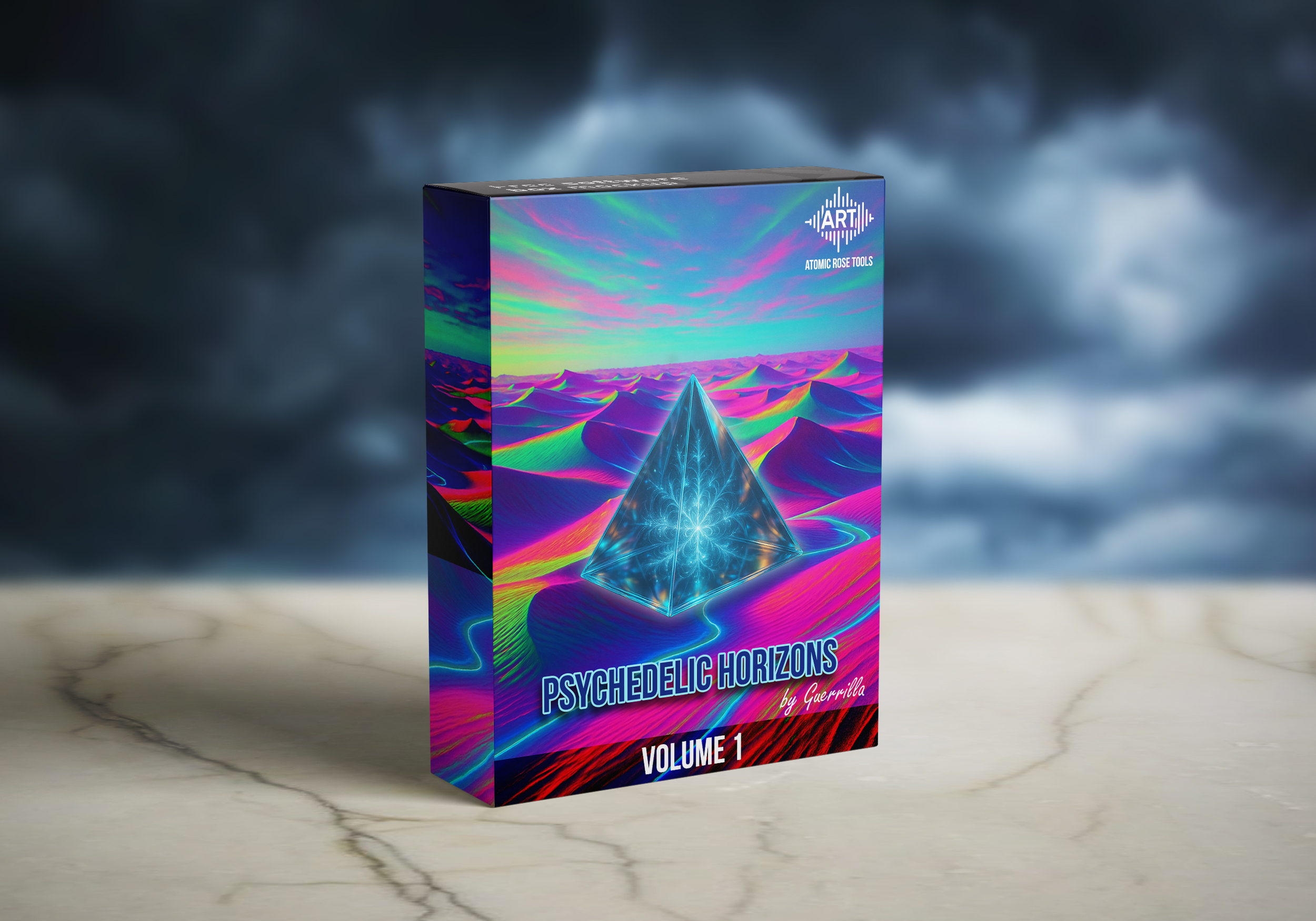
Producers exploring progressive psytrance sample packs will notice this distinction immediately in how professionally crafted bass loops sit within the mix.
Tempo and Kick-Bass Relationship [2026 Analysis]
Tempo selection determines how your kick and bass interact at the physical level. At 136-140 BPM, progressive psy allows the bass waveform to complete its cycle before the next kick hits, creating what engineers call the "bass pocket." This tempo range gives each element room to breathe while maintaining the driving momentum that keeps dancers moving.
Regular psytrance at 140-148 BPM compresses this relationship. The kick fires more frequently, demanding tighter bass programming and more aggressive sidechain compression. At 145+ BPM, the bass notes must be shorter to prevent frequency masking with the incoming kick, leading to that characteristic stabbing style.
Kick layering follows different frequency-splitting strategies per subgenre:
- Progressive Kick Strategy: Layer sub-kick (30-60 Hz) with soft transient (80-200 Hz), minimal high-end click, longer decay to fill groove gaps
- Full-On Kick Strategy: Layer tight sub (40-60 Hz) with aggressive mid-punch (200-500 Hz), prominent click (2-4 kHz), short decay for rapid fire bass patterns
DAW workflow benefits from knowing your target tempo before starting. Progressive psy sessions often begin with bass programming first the groove defines the track. Full-on production typically starts with kick design, then builds the bass around that central pulse. Both approaches work, but understanding which style you're targeting saves hours of iteration.
Using MIDI files for complete customization lets producers adapt pre-made bass patterns to their specific tempo requirements without audio warping artifacts.
Arrangement Density: Minimal Hypnosis vs Maximal Energy
The arrangement philosophy between progressive and full-on psytrance represents opposite ends of the sonic spectrum. Progressive psytrance embraces minimal psytrance layers as its core strength, typically running 8-12 elements during the drop section. Full-on psytrance stacks 16-24 elements, creating walls of sound that overwhelm the senses in controlled chaos.
This density difference impacts how you allocate frequency spectrum space:
- Progressive Allocation: Sub-bass (kick + bass only), low-mids (bass harmonics), mids (single lead or pad), high-mids (percussion detail), highs (hats + FX) strict separation, no frequency competition
- Full-On Allocation: Sub-bass (layered kicks), low-mids (multiple bass layers), mids (leads, vocals, FX), high-mids (synths, percussion), highs (hats, rides, noise FX) controlled overlap for wall-of-sound effect
Club sound systems respond differently to each approach. Progressive tracks translate well on Funktion-One systems where the bass clarity matters most. The minimal arrangement lets sound engineers push overall level without mud accumulating in the low-mids. Full-on tracks excel on large festival rigs where the stacked layers fill the massive frequency canvas.
For detailed techniques on balancing these approaches, production tutorials cover professional mixing strategies for both styles.
How to Build a Progressive Psytrance Bassline That Rolls
Creating that signature rolling progressive bass requires precise synthesis and mixing decisions. The goal is a continuous, flowing groove that drives the track without aggressive transient interruption.
- Select Your Oscillator: Start with a pure sine wave oscillator at 0-12 semitones below your root key. Sine waves provide the smoothest foundation for rolling basslines without harsh harmonic content.
- Program the Pattern: Create a 16th note pattern spanning two bars. Use legato mode so each note flows into the next without re-triggering the envelope.
- Apply Pitch Envelope: Add a subtle pitch envelope (+2 to +5 semitones on attack) to give each note definition without breaking the rolling feel. Fast decay returns to original pitch within 20-40ms.
- Shape with Filters: Insert a low-pass filter around 150-200 Hz. Automate cutoff slightly on off-beats for movement. The filter should open subtly, never exposing high-frequency content.
- Set Sidechain Compression: Route kick to sidechain input. Attack: 10-15ms (let transient through), Release: 100-150ms (matches groove tempo), Ratio: 4:1, Threshold: duck 3-6 dB maximum.
- Check Key and Tempo: Verify bass sits in compatible key with your melodic elements. Progressive bass often stays on root note or moves in simple fifth progressions complex harmonic movement breaks the trance induction.
The magic happens in step five that sidechain timing determines whether your bass grooves or fights the kick. Too fast and you lose the rolling feel, too slow and the low-end becomes undefined.
Psychedelic Horizons bass samples demonstrate these principles in professionally produced loops ready for your productions.
Production Workflow Differences: Build vs Maintain Energy
Progressive and full-on psytrance demand opposite creative mindsets during arrangement. Progressive psytrance builds tension through subtraction removing elements makes the remaining ones hit harder. Full-on maintains energy through addition, stacking layers that collectively create intensity.
Consider how each style handles a 32-bar development section:
| 8-Bar Block | Progressive Approach | Full-On Approach |
|---|---|---|
| Bars 1-8 | Full groove, all elements present | Building layers, adding percussion |
| Bars 9-16 | Remove lead, keep bass rolling | Add secondary lead, intensify FX |
| Bars 17-24 | Remove pads, strip to bass + kick | Stack Vocal cuts, build riser |
| Bars 25-32 | Reintroduce elements one by one | Drop all elements, maximum impact |
This contrast defines dancefloor psytrance energy management. Progressive DJs use this subtraction technique to extend sets over 2-3 hours without exhausting the crowd. Full-on producers pack maximum impact into shorter, intense bursts designed for peak-time moments.
Automation strategies differ accordingly. Progressive arrangements benefit from gradual automation curves filter cutoffs that open over 16-32 bars, reverb sends that slowly increase, volume rides that feel invisible. Full-on automation hits hard instant parameter jumps, aggressive filter sweeps, rapid-fire FX insertion.
common production questions often address how to balance these approaches when a track needs both hypnotic sections and energetic peaks.
Breakdown Structure Comparison
Breakdown lengths vary significantly. Progressive breakdowns often extend 32-64 bars, creating space for atmospheric textures and the reintroduction of melodic elements. Full-on breakdowns stay tight at 16-32 bars, building tension quickly before the drop releases. Progressive trance buildups favor delayed gratification, while full-on demands immediate payoff.
Key Takeaways: Choosing Your Psytrance Direction
Your production direction depends on creative goals, performance context, and personal style preferences. Neither approach is superior they serve different purposes within psychedelic trance culture.
- Journey Sets Favor Progressive: Long-form DJ sets benefit from progressive's hypnotic quality, allowing gradual energy curves that keep dancers engaged for hours.
- Peak Time Demands Full-On: Festival main stages and late-night slots require the explosive character of full-on psytrance to cut through crowd noise and maintain high energy.
- Opening Slots Suit Progressive: Warming up a crowd requires restraint progressive psy builds anticipation without stealing energy from headliner sets.
- Many Producers Blend Both: Contemporary psytrance often morphs between styles within single tracks, starting progressive and building toward full-on intensity.
- Sample Selection Matters: Choose sound design resources matching your target style progressive samples emphasize groove and space, full-on samples prioritize impact and layering potential.
- Technical Skills Transfer: Mastering kick-bass relationships in progressive psytrance improves your full-on production, and vice versa.
Both psychedelic trance subgenres share common DNA the 4/4 kick, the off-beat bass, the hypnotic intention. Your role as producer involves choosing which canvas suits your artistic vision.
Atomic Rose Tools philosophy embraces both directions, providing professional-grade sounds for producers exploring any psytrance style.
Frequently Asked Questions
What is מה ההבדל בין פרוגרסיב סייטראנס לסייטראנס רגיל??
מה ההבדל בין פרוגרסיב סייטראנס לסייטראנס רגיל? is an important topic worth understanding in depth. Getting familiar with the fundamentals helps you achieve better results and avoid common pitfalls.
How does מה ההבדל בין פרוגרסיב סייטראנס לסייטראנס רגיל? work?
מה ההבדל בין פרוגרסיב סייטראנס לסייטראנס רגיל? works by following a structured approach. Start with the core basics, then build your knowledge progressively consistency is key to seeing real results.
Can I use progressive psytrance basslines in full-on tracks?Yes, with modification. Progressive basslines need shorter decay and stronger transients to work at full-on tempos above 145 BPM. The rolling character can become a stylistic element when layered with sharper synth stabs, creating hybrid bass textures. Many successful tracks blend both approaches just ensure frequency content doesn't accumulate mud when layered.
What BPM works for mixing progressive and full-on together?138-142 BPM optimal overlap. This tempo range allows progressive tracks to play near their upper limit while full-on tracks sit comfortable at their lower range. DJ mixes spanning both genres often lock at 140 BPM, using key mixing to smooth transitions between styles.
What synths work best for progressive psytrance bass?Software: Serum, Spire, Massive X. Hardware: Access Virus, Nord Lead. The key feature requirement is clean sine or triangle oscillators with smooth filter response. FM synthesis also creates excellent progressive bass textures when programmed with subtle modulation.
How much headroom should my master have before mastering?-6dB to -8dB peak headroom. Both styles benefit from leaving dynamic range for the mastering engineer. Progressive tracks often arrive with slightly more dynamic range since they use fewer compression stages. Full-on tracks frequently push louder before mastering due to stacked limiting communicate intended delivery loudness with your engineer.
Do festivals book progressive psytrance for main stages?Yes, increasingly since 2024. Major festivals like Ozora, Boom, and Universo Paralello have expanded progressive offerings on main stages, previously relegated to side stages. Progressive psytrance builds extended journeys that work for large crowds seeking transcendental experiences rather than pure peak-time energy.
For ready-to-use sounds in both styles, browse sample packs featuring professionally produced basslines, percussion, and melodic elements designed for immediate integration into your productions.